Quick Notes: Tele-Yoga, GrandCare Home Monitoring, H.323 video for Macintosh

1.  We have begun a “soft opening”… with our Tele-Yoga for COPD/CHF patients, transmitting to 3 patients in their homes in California, which have been equipped with DocBoxes.  Originating from our “studio” (the community exercise room) in one of Cathedral Square’s housing facilities; we’re using a Polycom VSX 7000 for our transmission hardware.  The program, developed by faculty researchers at the University of California Dsypnea Laboratory, is being delivered to patients who otherwise would have difficulty traveling to a clinic or gym facility. The DocBox allows them to partake in a supervised exercise program while at home. We’re  hoping to add additional participants in the coming week.

2. One of the most interesting and comprehensive suite of in-home monitoring technology comes from GrandCare. It works on lots of different hardware, and integrates a lot of external hardware as well.

3. After suffering for years with the open source XMeeting application  for Mac OSX, the Logitech LifeSize Softphone appears to be a stable H.323 and SIP client for Mac videoconferencing. Digging a little deeper on the website, and exploring their other offerings, it looks like this was formerly the Muriel software that was purchased and re-branded by Logitech. Logitech also has a fancier version of the Logitech Orbit AF camera, the Conferencecam. We have had great luck with the AF, which we supply with the DocBox. Both the Softphone software and the camera appear to have list prices of $199….which means that the days of $1500-$3500 dedicated desktop videoconferencing systems may be numbered.
Tagged with: , , , ,
Posted in Personal Technology, Sensors, Skype, Technology, Technology-Enabled Home, Telemedicine, Videoconferencing

Tele-Health in the ICU

Can Hospital Chains Improve the Medical Industry?
http://www.newyorker.com/reporting/2012/08/13/120813fa_fact_gawande?currentPage=all

Posted in Uncategorized

And they didn’t say “eh”

I’ve spent the last four days on a trip to Vancouver B.C. for a meeting of our fledging research network.

Several colleagues from the U.S. independently mentioned how well things worked in Canada, how multicultural the society is, and how courteous and friendly the people are.  I’m typing this at the end of the concourse in Vancouver’s gleaming airport, watching the sunset over the Canadian Rockies. I’m plugged into a convenient outlet and connected with free wireless, available throughout the airport.  I’m in a spot with a better view, and more quiet than the airline club, albeit without the free drinks and food buffet.
Vancouver looks as if it is trying to figure out how to promote a less intensive energy expenditure.  About 90% of the taxis are Priuses.. The rest are a mix of mostly other Toyota models. The city has gone a long way to promote and accommodate bicycles, with easy rentals, storage lockers, dedicated bike lanes, etc.  My hotel, the Fairmont Hotel Vancouver offers two hour bike rentals for free, with helmet and bike lock included.
For all this, the city is expensive.. more than Washington D.C.  Eight dollars for a beer!
I have the nagging feeling that the U.S. used to be a lot more like this… and, in many respects, I wish we could be more like Canada., with it’s examples of beautiful new public infrastructure, socialized healthcare, and a more equitable society all around.
Posted in Uncategorized

How to cancel your iPad AT&T Data Plan

We have been deploying iPads for our health-care application, and I transferred my iPad from a person credit account to a corporate account. In the process I though it was understood that my credit card would no longer be charged, but I kept seeing charges come up on my card. Now after paying an extra $75.00 or so, I’ve managed to cancel the credit card account; I’m hoping that I haven’t borked the corporate account, but we’ll see what happens at the beginning of next month.

Two reasons we chose AT&T over Verizon for our application:

  • AT&T seems to have better coverage. As part of a settlement when Fairpoint acquired Verizon land-lines, AT&T acquired Unicel;  they took over the Unicel towers, and they had better penetration in the backwoods of New England.
  • AT&T offers a lower-cost iPad data plan at $14.99 /mo. for 250 megabytes, which we’re hoping is sufficient for our application. The next step for is $30.00 / mo. for 3 gigabytes.

So, anyway, here are the steps I took to cancel my personal plan.

1. Go to http://www.att.com/ipad

2. On the right there is a link: “Add more prepaid data”.

3. Once you get there, you need to log in using the eMail address that you set up for the ATT account. (I know this address, because ATT sends me an eMail each month saying that I successfully updated my data plan.)

4. Click on Add/Edit domestic plan

5. There will be an option to Cancel Plan.

Once you choose that cancel option, you’l be presented with two options;

  • Cancel plan and cancel your account
  • Cancel plan and retain your account for sixty days

If you just want to “turn off” your account for a couple months,  choose the second option.  You can then relog in during the sixty day period and restart the plan.

This whole process seems actually pretty civilized (if it works).  It allows you to turn it on or off as needed.  It gives you the 3G option for when you are traveling, say, but then allows you to go for a couple months without a charge.

The $30.00 / 3 gig plan has been changed from my earlier personal plan of $25.00 / 2 gigs.  I have to say, 2 gigs seemed to be more than sufficient while traveling. The nice thing too is that if there is an ATT hotspot present, the iPad will automatically default to that, so you can avoid daily or hourly charges to those. And of course, the iPad defaults to wireless in the presence of any valid hotspot, to keep your 3G usage lower.

Tagged with: , ,
Posted in Personal Technology, Wireless

Parallax / Polar Heart Rate Sensor

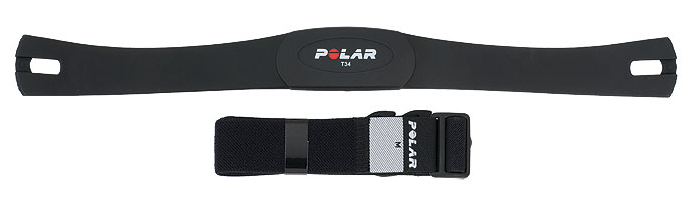
Parallax has added a Polar heart-rate sensor with chest strap to its line of sensors, as well as a receiver. Both are around $30.00 each.

Polar Heart Rate Monitor strap


Found in the super wonderful Nuts and Volts magazine.

Tagged with: ,
Posted in Sensors, Technology, Technology-Enabled Home

Other Links and Pundits

Getting Real About Fixing Health Care
Found this post from Doc Searles from back in 2009.

NY Times: Oregon Study Shows Benefits, and Price for Newly Insured
Researchers say Oregon’s lottery system for granting health insurance has made it the best place to study the costs and benefits of the federal health care law.

Getting Lost in the Labyrinth of Medical Bills In the “I rest my case that the free market in health care is complete and utter bollocks”, department. This article illustrates the complete opacity, capriciousness and outright fraud that takes place in the United States, in our so-called free market in health care.

Hospital care tends to be the most confounding, and experts say the charges you see on your bill are usually completely unrelated to the cost of providing the services (at hospitals, these list prices are called the “charge master file”). “The charges have no rhyme or reason at all,” Gerard Anderson, director of the Center for Hospital Finance and Management at Johns Hopkins Bloomberg School of Public Health. “Why is 30 minutes in the operating room $2,000 and not $1,500? There is absolutely no basis for setting that charge. It is not based upon the cost, and it’s not based upon the market forces, other than the whim of the C.F.O. of the hospital.”

Tagged with: , ,
Posted in Finance, Healthcare Reform

Medical Advocacy Blog A Mashup of Art, Outrage and Patient Advocacy

The Medical Advocacy Blog chronicles one women’s attempt to participate and advocate in the care of her terminally ill husband, and the wider implications of the Electronic Health Record.

I now sit in meetings for hours and watch power point lectures about electronic medical records. I listen to people dissect HIPPA regulations and incentive time tables. I hear arguments comparing ICD-9 code to ICD-10. And sadly, I hear many people tell me that patients should never see the entire medical record. I think they have no concept of the word meaning in “Meaningful Use.” For too long the medical record has been considered a billing document or a legal document: property of the physician or institution, instead of what it is, the story of the patient. “Meaningful Use” is not just a government buzz word or an unrealistic timetable of obligation, it is that childhood question: “What is the moral of this story?”

Tagged with: , ,
Posted in Electronic Health Record, Healthcare Reform, Technology

FitBit Aria WiFi Weight Scale

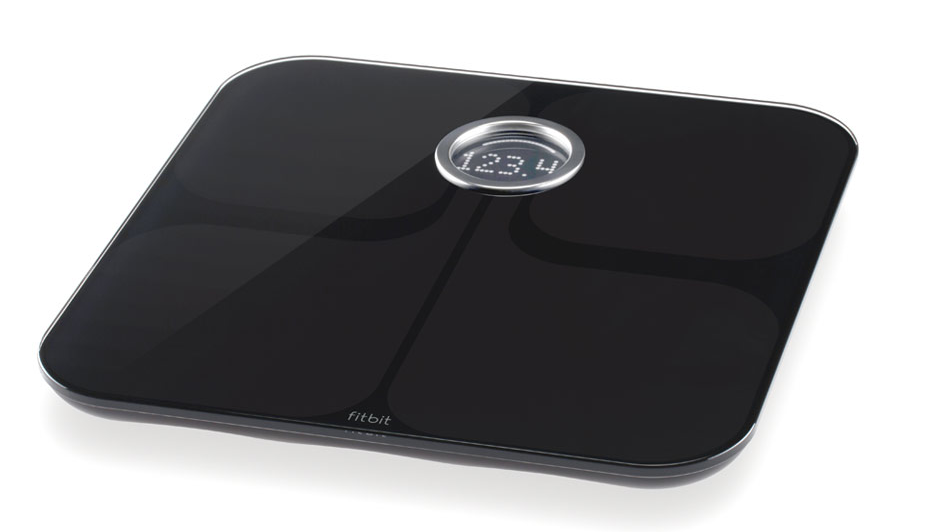
Times and technology change. My previous wireless scale from Tanita cost $350.00 and used BlueTooth to communicate to a computer. The FitBit Aria wifi scale works on a conventional wifi network. It will automatically register your weight and percentage body fat, and upload the results to the same personal FitBit web site that stores results from the regular FitBit personal tracker.

FitBit Aria WiFi Weight Scale.


Setup was a little finicky. There are a couple ways to do it, either using a web browser or your smart phone. After several attempts with the web browser I fired up the iPad and managed to get it configured using the smartphone app.

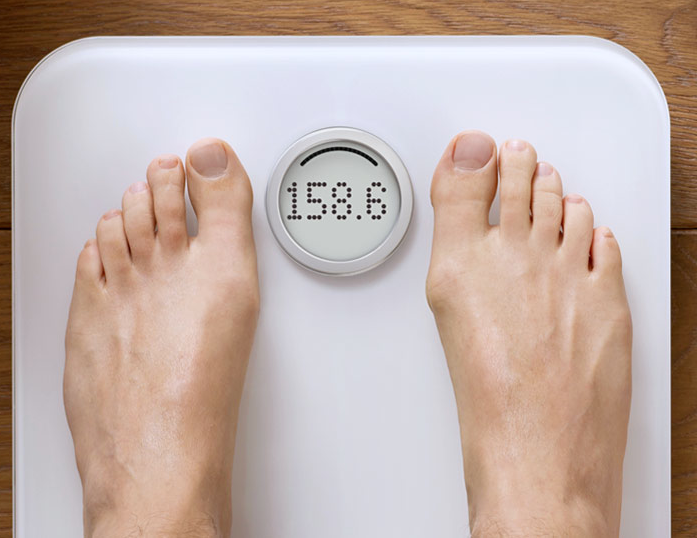
not my feet…or, sadly, my weight either.

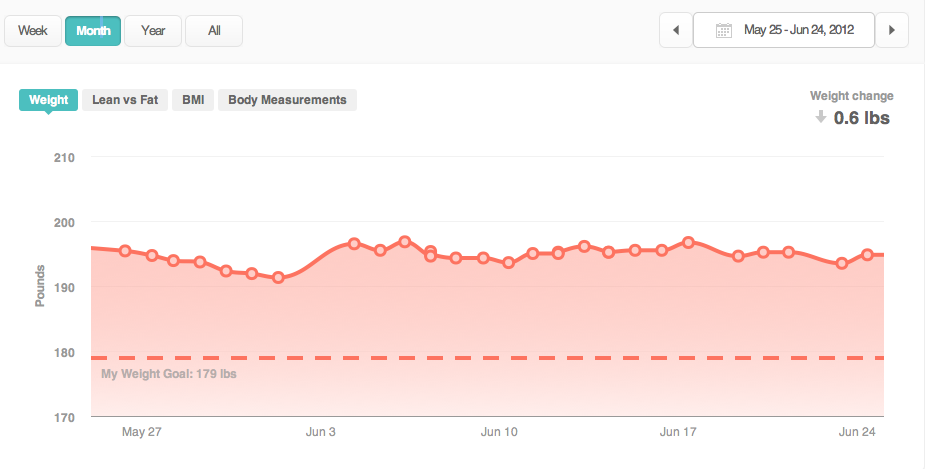
Standing on the scale each morning, the scale first displays your weight, (in pounds, kg, or stone), then your percentage of body fat. It then displays your initials, so that you know who the measurements are for. The scale is smart enough to figure out the different average weights from multiple users. Once completed, it uploads the data to the FitBit web site, where you can see it displayed on your account. (Click on the graph to enlarge).

The price of the Aria is $129.00. This is a great addition to the TFHHC toolkit, not only for us schlubs who want to track our weight, but also possibly for those with congestive heart failure. A three-pound weight gain within 24 hours can suggest a dangerous accumulation of fluid; more on CHF and weight gain is available here.

Tagged with: , ,
Posted in Personal Technology, Technology, Technology-Enabled Home, Telemedicine

FitBit Personal Tracker

I’ve had a FitBit pedometer for over a year now. Actually I’m on my second one, as I lost the first one. They are so darn unobtrusive that you hardly know they are missing. At $99.00 a pop, though, it it is worthwhile keeping track of your tracker.  

"FitBit"

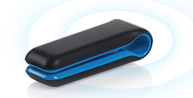
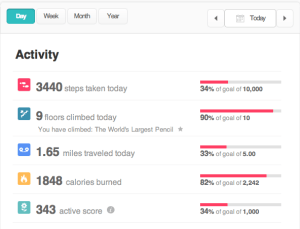
The FitBit is a pedometer on steroids. It counts your steps each day, and automatically uploads them to your account on the FitBit web site. The FitBit will also track changes in height; so if you climb five flights of stairs, it will record that effort, and incorporate the altitude change in its calculations of expended effort.  The web site encourages goal setting, and allows you to plot changes over time.

The FitBit will also plot sleep time by determining when you go to sleep, and the level of activity or restlessness that you show during your sleeping hours. The unit comes with a wrist band to fasten itself to your wrist. For counting steps, you can wear the FitBit clipped to a belt, or left loose in a pocket.

Setup can be a bit finicky,  especially for Mac users. Once you have established an account at the FitBit web site, you plug in the docking station via USB to your computer, and then place the FitBit into the dock. In theory there is a step-by-step set of instructions on screen. Despite any difficulties, once it is set up it works reliably, and requires little in the way of maintenance. If the docking station is plugged in, and the computer is turned on, the FitBit will wirelessly transmit the current readings every 15 minutes or so.  These will then be available instantly on the web site for viewing and comparisons.

Using FitBit

The FitBit is rediculously easy to use; Step 1. Put in pocket, Step 2. Walk. I carry it around most days, and, every once in awhile, check to see how the steps are going. On an average work day, despite my attempts to get up and walk around at least once an hour, I get up to maybe 3500 steps, which is pathetic, of course. It just goes to show how a suburban, car-dependent lifestyle sucks away opportunities for walking. So far, my best day has been 18,000 steps which reflects a 45 minute walk first thing in the morning, and then mowing both of my front and back lawn with my tiny electric push mower.

Weekends, I’ve had more time to enter data into the web site, by tracking my food intake. This is a useful exercise which provides lots of interesting information and more than a few surprises. (Yes there is sodium in yogurt.) All-in-all, a very handy gadget for those of us trying to crank up our activity, and keep track of our weight.

Tagged with: , ,
Posted in Technology, Technology-Enabled Home, Telemedicine

Why we need health-care reform #2323023

Article in the Times: Down the Insurance Rabbit Hole.

May the justices please meet my sister-in-law. On Feb. 8, she was a healthy 32-year-old, who was seven and a half months pregnant with her first baby. On Feb. 9, she was a quadriplegic, paralyzed from the chest down by a car accident that damaged her spine. Miraculously, the baby, born by emergency C-section, is healthy.

Were the Obama health care reforms already in place, my brother and sister-in-law’s situation — insurance-wise and financially — would be far less dire. My brother’s small employer — he is the manager of a metal-fabrication shop — does not offer health insurance, which was too expensive for them to buy on their own. Fortunately, my sister-in-law had enrolled in the Access for Infants and Mothers program, California’s insurance plan for middle-income pregnant women. AIM coverage extends 60 days postpartum and paid for her stay in intensive care and early rehabilitation.

This is such a horror show, it just goes on and on.

They must also meet the Medi-Cal asset test: beyond their house and one vehicle, they can hold $3,150 in total assets, a limit last adjusted in 1989. They cannot save for retirement (retirement plans are not exempt from the asset test in California, as they are in some states). They cannot save for college (California is not among the states that have exempted 529 college savings plans from their asset tests). They cannot establish an emergency fund. Family members like me cannot give them financial help, at least not officially. If either of them receives an inheritance, it will go to Medi-Cal. Medi-Cal services that my sister-in-law uses after age 55 will be added to a tab that she will rack up over the rest of her life. When she and my brother die, the state will put a lien on their estate; their child may inherit nothing. Even my brother’s hobby runs afoul of the asset test: he enjoys working on old cars, which he can no longer keep.

So, let’s see, not only is the person become a quadriplegic, with a new-born baby;
1. They are not allowed to have assets worth more than $3150 apart from 1 car, and the house
2. They are not allowed to accumulate retirement savings
3. They are not allowed to accumulate college savings
4. They are not allowed to receive cash contributions from other family members or to inherit.
5. Medical costs incurred over 55 will be charged against their estate after death (as if there will even be an estate given items 1-4).

And yet if this had happened in Massachusettes, home of Romneycare, things might have been a little better:

Their best hope is the survival of the Obama reform. Perhaps my brother can get a job that offers health insurance for the family, but without the reform’s protections, like the prohibition on denying coverage for pre-existing conditions, removal of annual and lifetime insurance caps, and reinsurance for large claims, there is no guarantee that they could obtain insurance. More likely, they would buy insurance on a health exchange. Here in Massachusetts, where such an exchange is in place, they could have purchased a plan with an affordable premium (at their income level, the monthly premiums range from $39 to $91 per adult). And these money and insurance issues would not have added to the other stresses in their profoundly changed lives.

Posted in Finance, Healthcare Reform